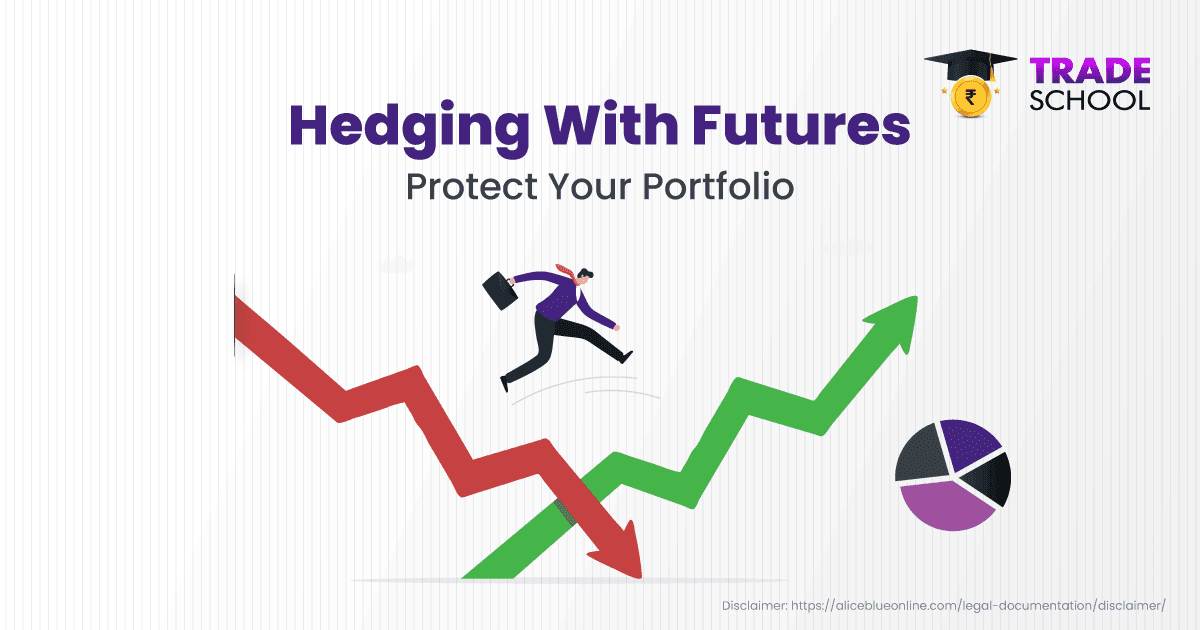
Hedging with futures helps protect your portfolio from market downturns by offsetting potential losses. By taking opposite positions in futures contracts, investors can balance risks. This strategy is especially useful during uncertain times, adding a safety layer without needing to sell long-term holdings.
Introduction To Futures Hedging
Futures hedging is a strategy used by investors to manage risks in their portfolio. It involves taking offsetting positions in futures contracts to reduce the impact of adverse price movements, helping protect returns without completely exiting long-term investments.
What Is Hedging?
Hedging is a risk management strategy where investors take an opposite position in a related asset to reduce potential losses. It acts like an insurance policy for your investments, offering protection when markets move against your expectations or existing positions.
Hedging Definition And Purpose In Investment Strategy
Hedging in investments means using tools like futures contracts to guard against price volatility. Its main purpose is to limit losses from unfavorable market shifts while allowing investors to hold onto assets they believe will grow over time.
Differences Between Hedging And Speculation
The main difference between hedging and speculation lies in intent. Hedging aims to reduce risk and protect existing investments from market volatility. In contrast, speculation involves taking on risk to profit from price movements, often without any underlying asset to safeguard or offset.
| Factor | Hedging | Speculation |
| Objective | Reduce or offset risk | Earn profit from price movements |
| Asset Involvement | Involves an existing position | No underlying asset is required |
| Risk Level | Lower risk by design | Higher risk due to uncertainty |
| Investor Type | Typically used by businesses or cautious investors | Common among traders seeking short-term gains |
| Example | Buying futures to protect stock portfolio value | Buying futures anticipating index rise without holdings |
Understanding Futures Contracts
Futures contracts are legal agreements to buy or sell a specific asset at a set price on a future date. They are standardized, traded on exchanges, and used by investors to hedge risk or speculate on market movements with leveraged exposure.
Basics Of Futures Contracts In The Indian Market
In India, futures contracts are regulated by SEBI and traded on platforms like NSE and BSE. These contracts cover indices, stocks, and commodities. They require margin deposits, have fixed expiry dates, and settle daily through a process called mark-to-market, ensuring transparency and efficiency.
Role Of Futures In Risk Management
The main role of futures in risk management is to protect investors from adverse price movements. By locking in prices through contracts, businesses and traders can reduce uncertainty, manage costs, and maintain stable financial planning even during market fluctuations or unexpected volatility in key assets.
- Price Locking for Stability: Futures contracts allow investors to lock in future prices. This protects against sudden market swings and helps businesses plan costs and revenues without fear of unpredictable price increases or declines.
- Minimizing Financial Uncertainty: By using futures, investors reduce the uncertainty around market movements. It becomes easier to forecast earnings or expenses, especially for companies exposed to commodity or interest rate fluctuations.
- Protecting Profit Margins: Companies can maintain stable profit margins by hedging with futures. This strategy helps them manage input costs effectively, even if market prices for raw materials or goods rise unexpectedly.
- Improving Investment Discipline: Futures trading encourages a structured approach. Investors are more likely to act based on strategy and analysis rather than reacting emotionally to short-term volatility or market noise.
- Versatile Risk Coverage: Futures can hedge various exposures, including commodities, stock indices, and currencies. This versatility makes them useful for investors aiming to manage risk while maintaining exposure to potential market returns.
Benefits Of Hedging With Futures
The main benefits of hedging with futures lie in reducing risk and managing costs effectively. It protects against market swings, helps maintain profit margins, and offers a more affordable way to safeguard investments compared to options or insurance-based strategies in volatile market environments.
Risk Mitigation
Hedging with futures helps reduce exposure to adverse market movements. By locking in prices or offsetting potential losses, investors can protect profits and maintain stability. This strategy is widely used to manage uncertainty, especially in volatile markets or unpredictable economic conditions.
Cost Efficiency
Futures offer a more affordable hedging tool compared to options or other insurance-like instruments. With relatively lower transaction costs and no upfront premium, they provide budget-friendly risk protection. This makes them ideal for businesses and investors seeking cost-effective ways to safeguard their positions.
Flexibility And Liquidity
Futures contracts are highly liquid and traded on regulated exchanges, offering ease of entry and exit. Their standardization ensures uniformity, while a wide variety of contracts allows hedging across sectors. This flexibility lets investors adapt quickly to changing market conditions with confidence.
Common Futures Hedging Strategies
Common futures hedging strategies include direct hedging, which offsets risk with an opposite position, and cross hedging, which uses related assets when exact matches are unavailable. Dynamic hedging adjusts positions based on market moves, while spread trading and options on futures add flexibility and risk control.
Direct Hedging
Direct hedging involves taking an opposite position in the futures market to offset potential losses in the spot market. It’s simple and effective, helping investors protect profits and stabilize portfolio value during uncertain or volatile market periods.
Cross Hedging
Cross hedging is used when a direct hedge is unavailable. It involves using a closely related futures contract to hedge risk. This method requires correlation between assets and is often applied when exact matches for hedging instruments are not traded actively.
Dynamic Hedging
Dynamic hedging adjusts futures positions regularly based on market movements or portfolio changes. It combines real-time analysis and quick decision-making, allowing investors to maintain protection as prices shift. This approach is more flexible but requires careful monitoring and active risk management.
Spread Trading
Spread trading hedges risk by simultaneously buying and selling related futures contracts. It minimizes exposure to broad market moves while capitalizing on price differences between contracts. This method is useful for advanced traders seeking reduced volatility with potential for profit through relative value strategies.
Using Options On Futures
Options on futures provide another hedging layer by offering the right, not the obligation, to buy or sell a futures contract. They limit downside while allowing upside participation. This strategy combines the benefits of futures with the added control of options.
Implementing A Futures Hedging Strategy
Implementing a futures hedging strategy involves assessing portfolio risk to understand exposure, then selecting appropriate futures contracts that align with your holdings. Calculating hedge ratios ensures proper coverage, followed by executing and actively monitoring the hedge to adjust for market movements and maintain protection.
Assessing Portfolio Risk
Understanding portfolio risk involves identifying potential losses due to market changes. Analyze asset sensitivity to price movements, economic shifts, or sector performance. This step helps in defining the exact areas that need protection through futures, creating a solid base for effective hedging.
Selecting Appropriate Futures Contracts
Choosing the right futures contract depends on what assets you’re protecting. Ensure the contract closely correlates with your portfolio. For example, index futures may suit equity portfolios. The closer the match, the more accurate the hedge will be in offsetting potential losses.
Calculating Hedge Ratios
The hedge ratio determines how many futures contracts are needed to protect your position. It’s calculated using the value of your portfolio and the contract size. A correct ratio avoids over-hedging or under-hedging, making your risk management more precise and cost-efficient.
Executing And Monitoring The Hedge
Once the hedge is placed, monitor it regularly. Market conditions shift, which can change your exposure. Adjust the hedge if the portfolio grows, contracts, or changes structure. Active tracking ensures continued protection and fine-tunes your risk strategy as the market evolves.
Risks In Futures Hedging
Futures hedging carries specific risks. Basis risk occurs when the hedge and asset do not move perfectly together. Liquidity risk arises if exiting a contract is hard. Margin requirements tie up capital, while strict regulatory compliance ensures that hedging strategies follow legal and financial rules.
Basis Risk
Basis risk happens when the price movement of the futures contract does not match the price movement of the underlying asset. This mismatch can reduce the hedge’s effectiveness, leaving investors partially exposed to the very risks they intended to minimize through hedging.
Liquidity Risk
Liquidity risk arises when there are not enough buyers or sellers in the market to exit a futures position easily. This can result in slippage, poor pricing, or even the inability to close out a trade when market conditions become volatile or unpredictable.
Margin Requirements
Margin requirements demand that a portion of capital be set aside to maintain a futures position. These margins are adjusted daily, and if losses occur, additional funds may be needed quickly. This limits cash flexibility and increases short-term financial obligations.
Regulatory Compliance
Regulatory compliance involves adhering to market regulations and contract rules set by exchanges and authorities. Traders must maintain proper records, report positions as required, and follow trading limits. Non-compliance can result in penalties, legal trouble, or forced closure of positions by the exchange.
Hedging With Futures – Summary
- Futures hedging protects investments by taking opposite positions in futures contracts. It helps reduce the effect of price drops while allowing investors to stay invested, making it ideal for long-term risk management.
- Futures contracts are standardized agreements to buy or sell assets later at a fixed price. They are traded on exchanges and used for hedging or speculating, offering investors flexibility with leveraged exposure.
- The main benefits of futures hedging are risk reduction and cost efficiency. It helps maintain profitability during market swings and is often cheaper than options or insurance, especially in unpredictable or volatile conditions.
- Common futures hedging strategies include direct and cross hedging. Direct offsets risk exactly, and cross uses similar assets. Dynamic hedging adjusts with trends, while spreads and options on futures give more control and flexibility.
- Implementing futures hedging starts by evaluating portfolio risk. Then, select matching futures contracts, calculate hedge ratios, and execute. Ongoing monitoring ensures that adjustments are made to maintain protection against changing market conditions.
- The main risks in futures hedging include basis risk, where assets and hedges diverge. Liquidity issues may hinder exits, margin locks capital, and regulations require careful compliance to keep strategies valid and legal.
Hedging With Futures – FAQs
What Is The Primary Purpose Of Hedging With Futures?
The main purpose of hedging with futures is to reduce the risk of price fluctuations in assets. By locking in prices through futures contracts, investors can protect their portfolio value from adverse market movements and maintain more predictable financial outcomes.
Can Individual Investors In India Use Futures For Hedging?
Yes, individual investors in India can use futures for hedging. SEBI regulations allow retail participation, provided the investor has a trading account and sufficient margin. Hedging helps safeguard investments in stocks or sectors from short-term volatility or broader market downturns.
What Is The Difference Between Direct And Cross Hedging?
The main difference between direct and cross hedging lies in asset matching. Direct hedging involves using a futures contract that exactly matches the asset you hold, ensuring high accuracy. Cross hedging is used when no exact match is available, relying on a related asset’s contract to offset risk.
Are There Costs Associated With Hedging Using Futures?
Yes, hedging with futures includes costs such as brokerage fees, margin requirements, and potential opportunity costs. While these are typically lower than other forms of hedging, they can impact returns. It’s important to balance these costs against the protection provided by the hedge.
How Often Should I Review My Hedge Positions?
You should review hedge positions regularly, ideally weekly or during major market movements. Monitoring helps ensure the hedge still aligns with portfolio exposure. Adjusting the hedge based on price shifts or changes in strategy keeps the protection effective and responsive to risk.
What Happens If The Futures Market Moves Against My Hedge?
If the futures market moves against your hedge, the loss on the hedge may offset gains in your underlying asset. However, if not well-aligned, it may amplify losses or reduce effectiveness. Constant evaluation is key to maintaining balance in your strategy.
How Do I Determine The Right Futures Contract For Hedging?
To choose the right futures contract, assess the asset you want to hedge, check for a matching or correlated contract, and evaluate liquidity and margin needs. Accuracy in correlation helps reduce basis risk and ensures the hedge performs effectively in adverse conditions.
What Are The Risks In Hedging?
Hedging carries risks like basis mismatch, liquidity shortages, and sudden margin calls. Inaccurate correlations can reduce effectiveness. Moreover, future losses may offset gains and vice versa. Understanding these risks helps ensure that the hedge supports rather than hinders portfolio stability.
Disclaimer: The above article is written for educational purposes and the companies’ data mentioned in the article may change with respect to time. The securities quoted are exemplary and are not recommendatory.